(Feature Image: Investing in quality outdoor furniture. Credit: Osier Belle) Styling a home well is rarely about buying more. It is about buying the right pieces, the ones that carry a room or a terrace without needing to be replaced or replicated a year later. That principle applies just as much outdoors as it does …
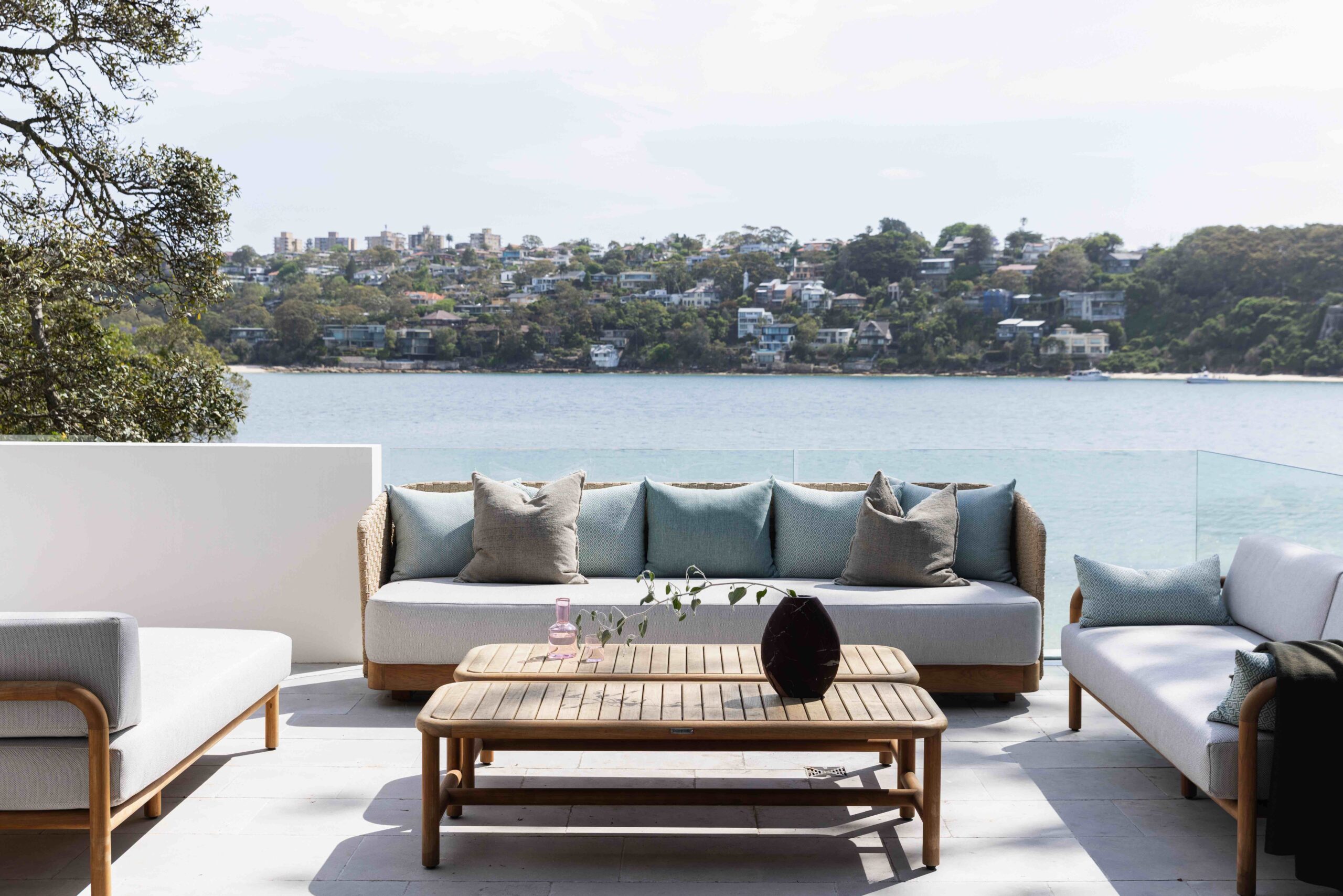
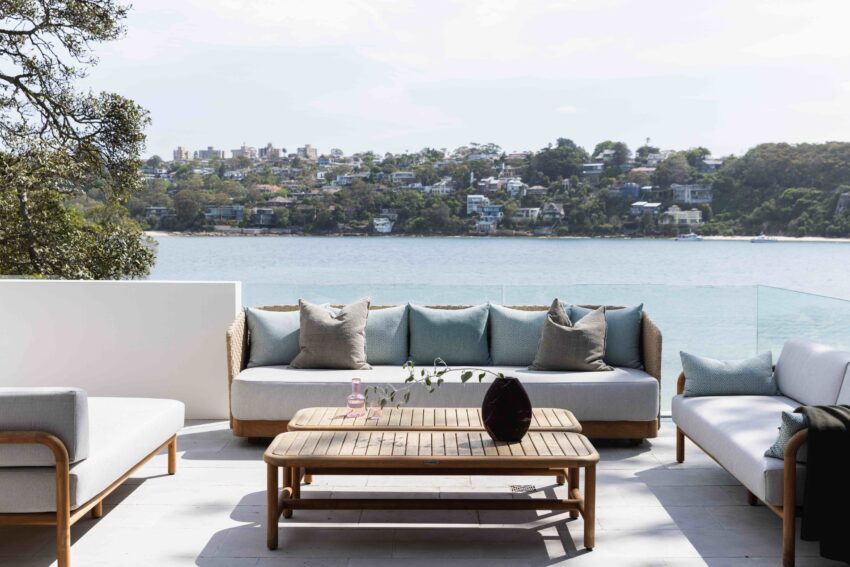
(Feature Image: Investing in quality outdoor furniture. Credit: Osier Belle)
Styling a home well is rarely about buying more. It is about buying the right pieces, the ones that carry a room or a terrace without needing to be replaced or replicated a year later. That principle applies just as much outdoors as it does inside, yet outdoor furniture is often treated as the more disposable half of a home’s design.
Cheaper outdoor pieces can look almost identical to premium ones in a showroom or online listing. The difference only becomes obvious after a season or two of sun, rain, and everyday use, by which point the cost of replacing a faded or failing furniture often adds up to more than the original investment in the premium outdoor set.
Why Quality Outdoor Furniture Costs More Upfront
- Better frame materials, such as marine-grade aluminium or properly treated timber, resist corrosion and warping far longer than budget alternatives.
- Higher-quality weaving and upholstery fabrics are chosen for UV and moisture resistance, not just appearance.
- Construction methods, including joinery and stitching, are built for repeated outdoor use rather than a single season of display.
- Design details are considered rather than mass-replicated, giving a piece a longer visual shelf life.
None of this is obvious at first glance, which is exactly why so many people default to the cheaper option. It looks the same in a photo. It is only in the way it wears over time that the gap becomes clear.
The True Cost Comparison
| Budget Outdoor Setting | Quality Outdoor Setting |
| Lower upfront cost | Higher upfront cost |
| Fading, cracking, or rusting within one to two seasons | Retains finish and structure across many seasons |
| Often replaced entirely rather than repaired | Built to be maintained and repaired rather than discarded |
| Repeated spend every few years | One considered purchase that holds its value over time |
When the cost of a budget setting is spread across the number of times it typically needs replacing, the gap between it and a quality piece narrows considerably, and often reverses altogether.
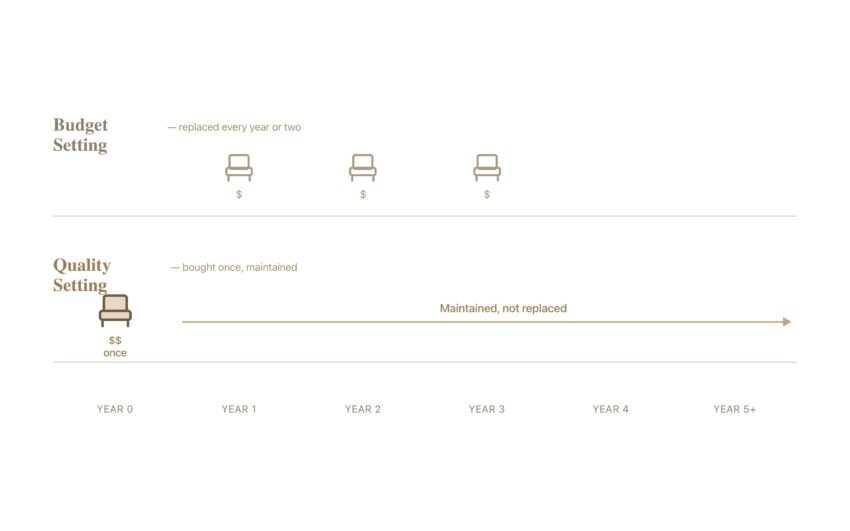
(Image: Cost comparison for budget vs quality outdoor settings. Credit: Custom/Original)
Choosing Pieces That Elevate a Space Rather Than Fill It
Good styling is as much about restraint as it is about selection. A smaller number of well-made, well-proportioned pieces will almost always read as more elevated than a space crowded with items chosen to fill a budget outdoor furniture package.
- Choose one or two statement pieces rather than a full matching set bought purely for convenience.
- Prioritise proportion, making sure furniture is scaled correctly to the space rather than simply available in a set size.
- Layer in natural materials and textures that soften a hard outdoor space, such as woven detailing or timber accents.
- Think of outdoor furniture as an extension of the home’s interior styling, not a separate, lower-priority category.
Reading Quality Before You Buy
Because quality is hard to judge from a photo, it helps to know what to actually check when you are standing in front of a piece, whether that is in a showroom or during an in-home consultation.
- Run a hand along the frame joins. Quality pieces feel solid and seamless, while budget items often reveal visible gaps or rough edges.
- Ask directly what the outer weave or upholstery fabric is rated for, including UV and water resistance, rather than accepting a general description like ‘outdoor fabric.’
- Check how the piece is finished underneath or on the reverse, since manufacturers confident in their construction rarely hide rough or unfinished detailing.
- Ask how repairs are handled if a component wears out. Quality manufacturers typically offer parts or reupholstery rather than requiring full replacement.
These small checks take only a few minutes but reveal far more about long-term durability than a price tag or a glossy product photo ever will.
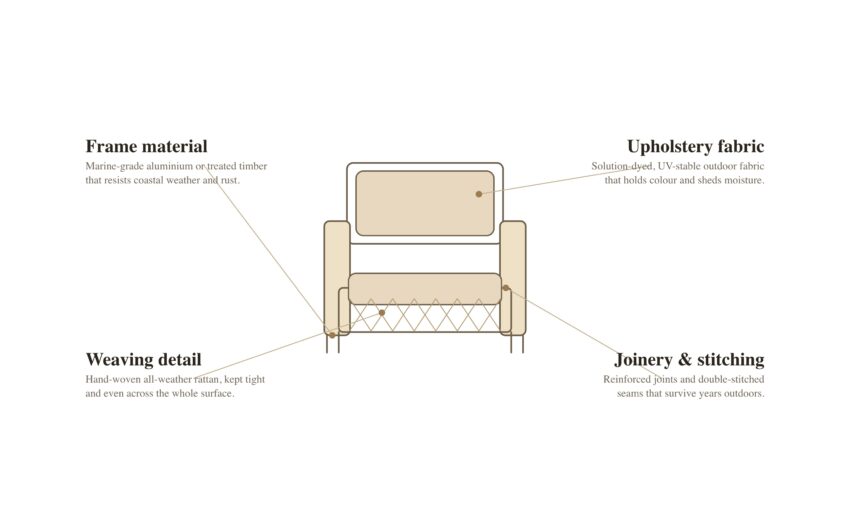
(Image: Details to check for quality. Credit: Custom/Original)
A Note on Customisation
One of the advantages of working with a specialist outdoor furniture maker rather than a generic retailer is the ability to adjust a piece to fit a specific space or style, rather than settling for whatever configuration happens to be in stock.
Brands such as Osier Belle, which design and manufacture their own luxury outdoor furniture, are a good example of this. Because they own their production, pieces can be customised in size, configuration, and finish, which makes it much easier to style a space with furniture that actually fits, rather than furniture the space has to accommodate.
Styling Tip: Let Materials Do the Talking
One of the simplest ways to signal quality in a styled space is to let natural materials do the work rather than layering on excessive accessories. A single well-made timber and woven-fibre piece often reads as more considered and elevated than a fully accessorised budget setting, because the material itself carries visual weight without needing extra styling to prop it up.
Budgeting for Quality Without Overspending
Investing in quality outdoor furniture does not necessarily mean spending on every piece in a setting. A common and effective approach is to invest more on the pieces used most often or seen most prominently, such as a main sofa or dining set, while being more flexible on secondary items like side tables or occasional chairs.
- Prioritise spend on the largest, most visible pieces in a space, since these carry the most visual and functional weight.
- Treat accent or occasional pieces as an area where a slightly more modest budget is reasonable.
- Plan purchases in stages if needed, starting with hero pieces and building the setting out over time rather than compromising on quality across the board.
What to Prioritise When Investing in Outdoor Furniture
- Ask what the frame and upholstery materials are actually made from, not just how they look.
- Check whether the piece has been designed for the climate it will be used in, particularly UV and moisture resistance.
- Consider whether the piece can be customised to fit the space properly, rather than forcing the space to fit the piece.
- Factor in the cost of replacement over several years, not just the upfront price tag.
Outdoor furniture deserves the same considered approach applied to every other design decision in a home. A smaller number of well-made, well-chosen pieces will consistently outperform a larger collection of budget furniture, both in how the space looks and how much it ends up costing over time.