I've built four homes. I work in the industry every single day. And if there's one thing I wish someone had sat me down and explained before my first build, it's this. The price on your building contract is not the price of your home. It's a starting point. A big, important, slightly misleading starting …
I’ve built four homes. I work in the industry every single day. And if there’s one thing I wish someone had sat me down and explained before my first build, it’s this. The price on your building contract is not the price of your home.
It’s a starting point. A big, important, slightly misleading starting point.
Most people sign a contract feeling like they’ve locked in their number. Then six months later they’re staring at a spreadsheet wondering how they ended up tens of thousands of dollars past what they planned. It’s not because they were reckless. It’s because nobody told them what lives outside that contract price.
So let me tell you. All of it. The stuff that’s easy to forget, easy to underestimate, and easy for a salesperson to leave off the page because it makes their number look better.
Why the base price looks so good (and why it isn’t)
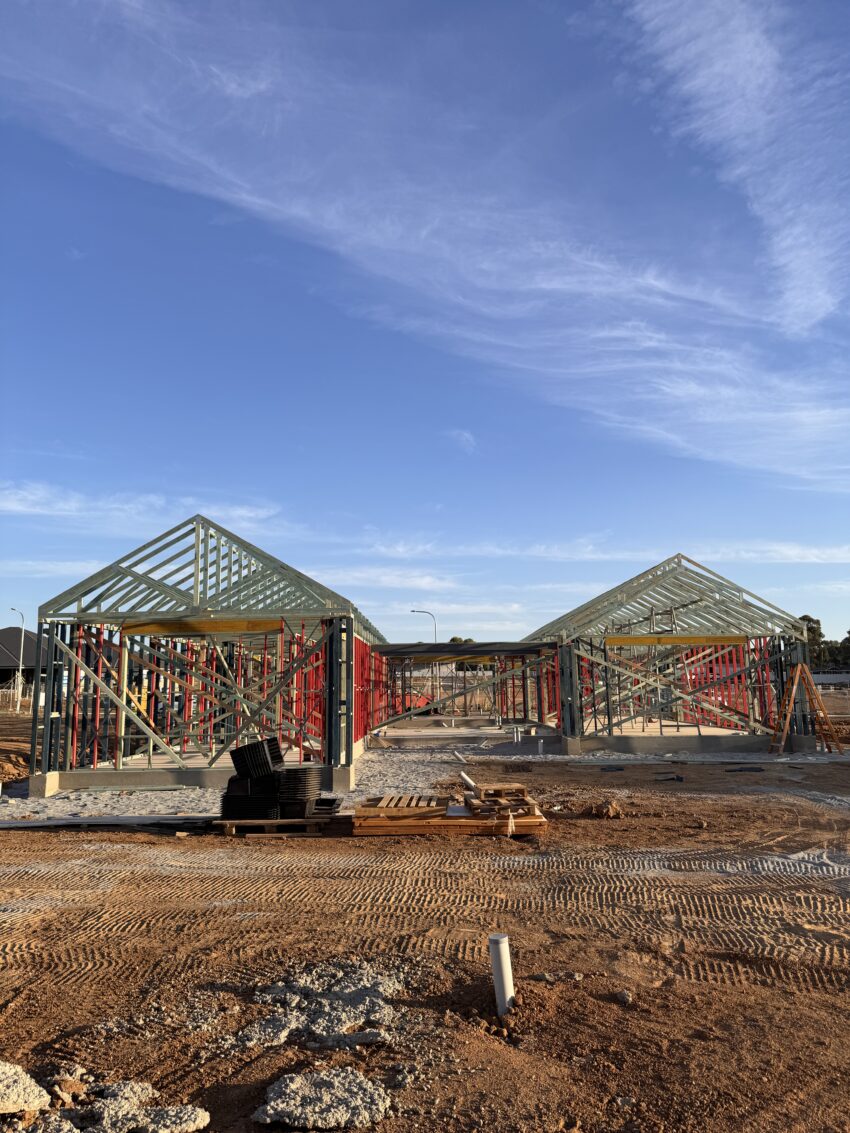
When you’re comparing builders, you’re comparing base contract prices. That’s natural. But base prices are designed to be competitive, which means they’re often stripped back to the studs, sometimes literally.
A base price typically covers the home itself on a standard, flat, easy block with standard inclusions. The moment your actual site, your actual taste, or your actual life enters the picture, the number starts to climb. None of this is a scam. It’s just how the industry quotes. The problem is that buyers assume the base covers more than it does.
Here’s what usually doesn’t make the cut.
Site costs, the big one nobody can fully predict
Site costs are everything involved in making your specific block ready to build on, and they vary wildly depending on your land.
This includes things like soil testing and the classification that comes from it (reactive clay soils cost more to engineer for), excavation and cut-and-fill if your block slopes, rock removal if you hit it, retaining walls, drainage, and connecting to services like water, sewer, power, and stormwater if they’re not already at the boundary.
Two identical homes on two different blocks can have site costs that differ by twenty or thirty thousand dollars. A flat, cleared block in an established estate is cheap to prepare. A sloping bush block with reactive soil and services a long way off is not.
The tricky part is that some of these costs can’t be fully known until work begins. A provisional sum gets allocated, and if the ground throws up a surprise, you wear the difference. Ask your builder how they’ve handled site costs in the contract, and whether they’re fixed or provisional.
Driveway and paths
Your contract gets you to your front door. It very often doesn’t get you to your block from the street in any finished way.
A driveway is a real cost, and it scales with length, material, and how fancy you go. A short plain concrete driveway is one number. A long exposed-aggregate or paved driveway with paths wrapping around the house is a much bigger one. Add a crossover (the bit connecting your driveway to the road, which the council has opinions about) and it climbs again.
Budget realistically here, especially on acreage or a deep block where the driveway run is long.
Landscaping, the cost everyone leaves until last and then can’t afford
This is the one that breaks hearts. You’ve spent your whole budget on the house, and now you’re standing in a moonscape of dirt and builder’s rubble wondering why the yard looks like a construction site. Because it was one.
Landscaping covers turf, garden beds, plants, soil and mulch, fencing, retaining, irrigation, and any hardscaping like decks, pergolas, paving, or outdoor entertaining areas. A basic tidy-up with turf and a few plants is achievable on a modest budget. A proper landscaped yard with fencing, a deck, and established planting is a project in its own right and can run into the tens of thousands.
You don’t have to do it all on day one. But you do have to plan for it, because a half-finished yard is the thing that makes a brand-new home feel unfinished for years.
Fencing
Related to landscaping but worth its own mention because it sneaks up on people. Unless your block already has fencing, you’re paying for it. Side and rear boundaries, gates, and sometimes a contribution to a shared fence with a neighbour. Costs depend on length, material, and height. On a corner block with a lot of street frontage, fencing can be a genuinely large line item.
Window furnishings
Your beautiful new windows arrive completely bare. Every single one of them. And blinds, curtains, or shutters across a whole house add up fast. This is regularly a five-figure cost in a family home, and people are routinely shocked by it.
You can phase it (do the bedrooms and bathrooms first for privacy, living areas later), but factor it in from the start. Quality window furnishings also do real work for energy efficiency, which matters more than people realise.
Floor coverings, check what’s actually included
Some contracts include flooring throughout. Many include it only partially, or include a basic allowance that you’ll want to upgrade. Tiles, carpet, timber, and the underlay and installation that go with them are easy to underestimate. Always check exactly which rooms have flooring included and at what allowance, then price the upgrade you actually want.
Outdoor living areas
That gorgeous alfresco in the render? Check whether it’s fully finished in your contract or whether it’s a bare slab and roof. The decking, the outdoor kitchen, the ceiling lining, the fans, the lighting, the screening are frequently extras. Outdoor rooms are some of the most valuable space in an Australian home, and they’re also some of the most commonly under-budgeted.
Upgrades and selections, death by a thousand small yeses
This is where the contract price and the final price quietly part ways.
Every standard inclusion has an upgrade path. Standard tapware or the nice tapware. Laminate benchtops or stone. Standard tiles or the ones you actually fell in love with. Builder’s-range carpet or something underfoot you’ll enjoy for a decade. Each individual upgrade feels small and reasonable in the selections appointment. Stacked together, they’re one of the biggest reasons builds blow past budget.
There’s nothing wrong with upgrading. I’m an interior designer, I’m the last person who’ll tell you to settle. But go into your selections with a clear upgrade budget and decide in advance where you’re spending and where you’re happy with standard. Otherwise the momentum of “well, while we’re here” will make the decisions for you.
Variations
A variation is any change to the contract after it’s signed. Move a wall, add a powerpoint, change a window, swap a fitting. Each one comes with a cost, and often an admin fee on top, and they can carry schedule impacts too.
The cheapest variation is the one you don’t need because you got the design right before signing. Spend the time up front. Walk the plan slowly. Think about how you actually live. It’s far cheaper to change a line on a drawing than a wall in a finished house.
The costs that have nothing to do with the builder
These sit outside the contract entirely and people forget them constantly.
Council and authority fees, including any contributions and the cost of approvals. Connection fees for utilities. Your own legal and conveyancing costs. Stamp duty where it applies to your situation. Insurance during the build. Finance costs, including the interest you may be paying on a construction loan as it draws down. And if you’re renting or paying a mortgage elsewhere while you build, that’s months of double housing costs to carry.
None of these show up on the building contract because they’re not the builder’s to charge. But they’re absolutely part of the real cost of getting into your home.
So what do you actually do about all this?
You don’t panic, and you don’t give up on building. You go in with your eyes open.
Take your base contract price and build a second budget beside it, the real budget, that includes site costs, driveway, landscaping, fencing, window furnishings, flooring upgrades, your selections allowance, a variation buffer, and all the external fees. Add a contingency on top, because something always comes up. A genuine contingency is the difference between a stressful build and a manageable one.
Ask your builder direct questions. What’s provisional and what’s fixed? What’s the site cost allowance based on, and what happens if it’s exceeded? Is the alfresco finished or a shell? What flooring and window furnishings, if any, are included? A good builder will answer these clearly and won’t make you feel difficult for asking. If they’re cagey, that tells you something.
The people who enjoy their builds aren’t the ones who got lucky. They’re the ones who knew the real number before they started, and budgeted for the home they were actually going to live in, not the stripped-back version on page one of the contract.
Also check out my eBook – Build Smarter: The Australian Energy Efficient Home Guide.