The kitchen is the room you use the most and forgive the least. A bedroom can be a bit awkward and you'll barely notice. A kitchen that's badly planned will irritate you every single time you cook, unpack the shopping, or try to get a coffee while someone else is making toast. I've designed a …
The kitchen is the room you use the most and forgive the least. A bedroom can be a bit awkward and you’ll barely notice. A kitchen that’s badly planned will irritate you every single time you cook, unpack the shopping, or try to get a coffee while someone else is making toast.
I’ve designed a lot of kitchens and lived in plenty of my own, and the mistakes that ruin them are almost never about the colour of the cabinets or the brand of the tap. They’re about the boring, invisible stuff. Measurements, placement, clearances. The decisions that don’t show up in a photo but absolutely show up in your daily life.
Here are the ten that come up again and again, with the numbers to get them right.
1. Bad bin placement
The bin is the most-used item in the kitchen and the most under-thought. If you have to walk across the room, open a cupboard, and pull out a drawer to scrape a plate, you’ll resent it forever, and you’ll end up leaving a manky bin on the bench instead.
Put the bin where the work happens. The ideal spot is right next to or under the sink, in a pull-out, so prep waste and scrapings go straight in. If your dishwasher is beside the sink (it should be, more on that shortly), make sure the bin pull-out and the dishwasher door don’t fight each other. Plan a pull-out bin into the cabinetry from the start rather than shoving a freestanding bin in a corner later.
2. An island that’s the wrong size
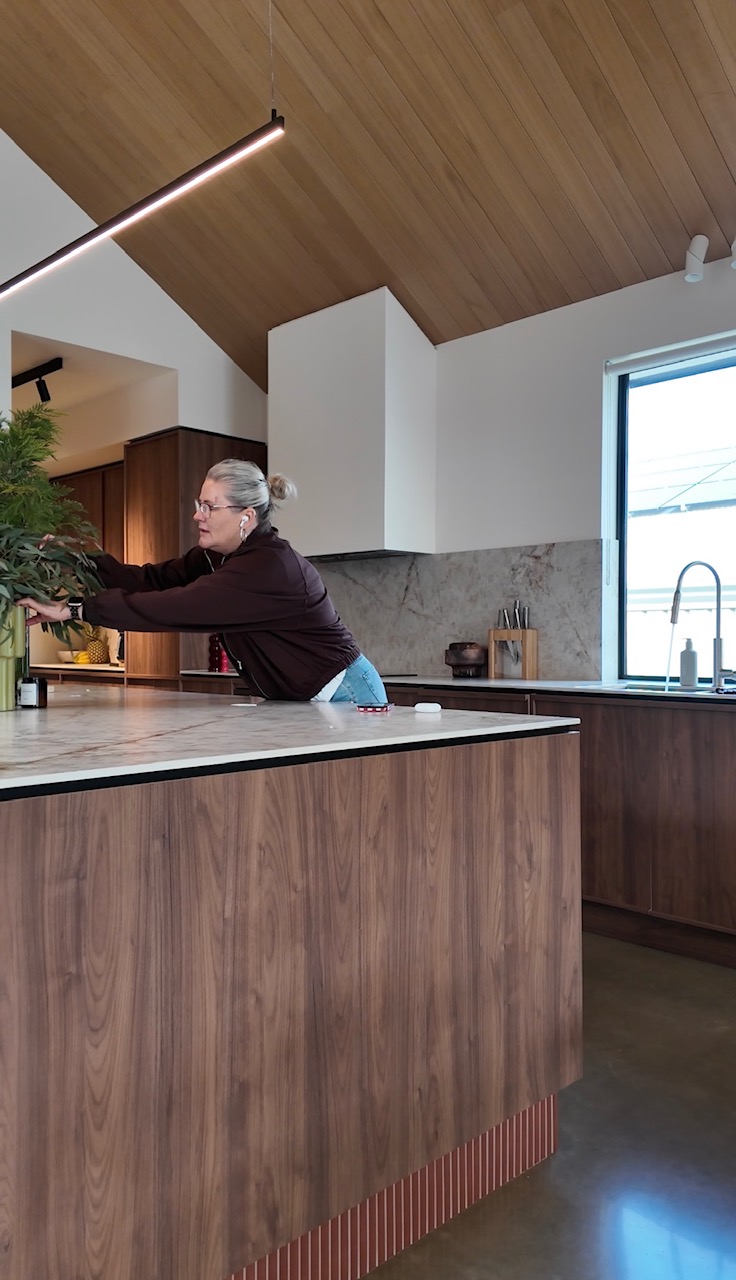
Islands are where dreams go to get oversized or undersized. Too small and it’s a useless perch. Too big and you can’t reach the middle to clean it, and the room feels cramped around it.
You want clear walkways around an island. Allow at least 1000mm of clearance on all sides, and 1200mm or more on the side where the dishwasher, oven, or main drawers open so two people can pass and appliances can open fully. If you’re seating people at the island, allow around 600mm of width per stool and a knee-space overhang of at least 300mm so people aren’t sitting with their legs squashed against the cabinetry. An island under about 1000mm deep rarely gives you both usable bench and seating, so don’t squeeze one in where there isn’t room.
3. Sink in the wrong position
The sink is the busiest point in the kitchen, so where it sits dictates how the whole room flows. Jammed into a corner, or miles from the bin and dishwasher, and every task becomes a trek.
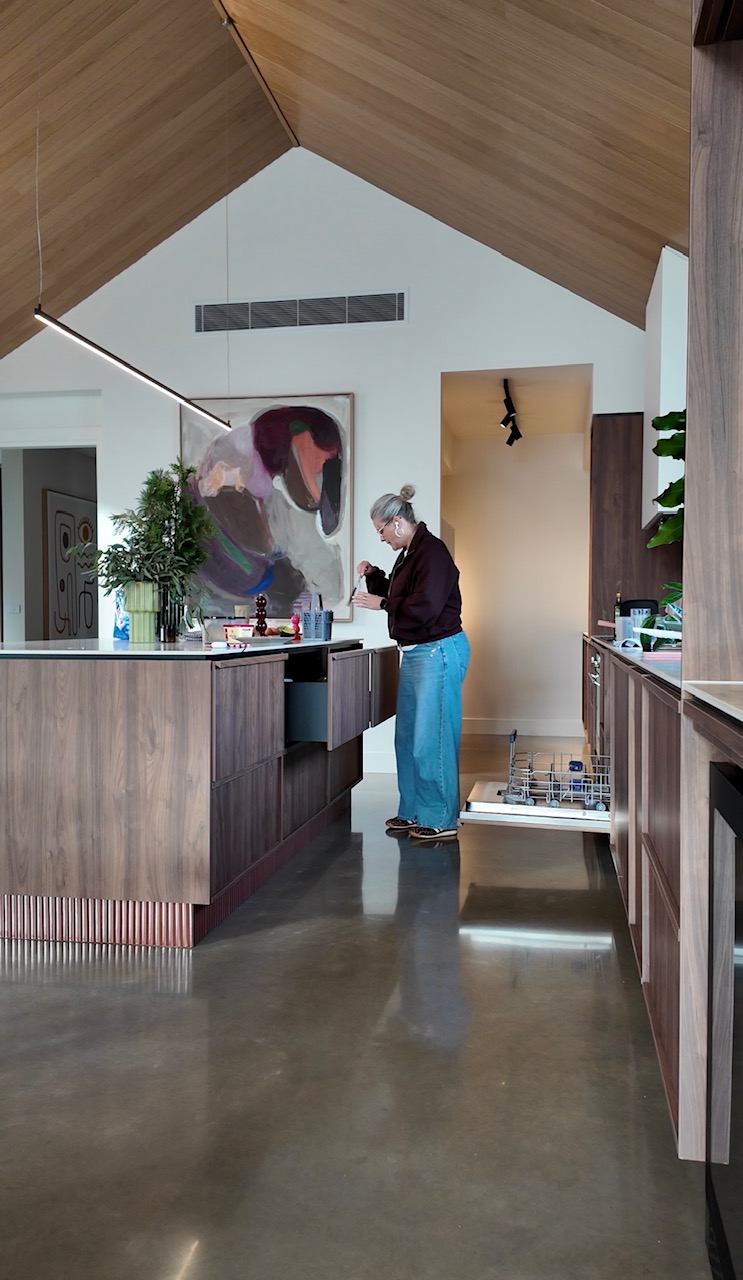
Keep the sink, dishwasher, and bin clustered together. They’re a team. Put the dishwasher immediately beside the sink so you can rinse and load without dripping across the floor. Give yourself usable bench on both sides of the sink if you can. One side to stack dirty dishes, the other to drain clean ones. A sink with bench on only one side, or none, makes washing up a juggling act.
4. Not enough bench space
This is the complaint I hear most. People obsess over the look and forget they actually need somewhere to put things. You unpack the shopping, prep dinner, rest the hot tray, charge the phone, and suddenly there’s nowhere left to chop.
Prioritise a generous run of uninterrupted bench beside the cooktop and beside the sink, since that’s where you work. As a guide, aim for at least 900mm of clear bench on at least one side of the cooktop and a good stretch beside the sink. Don’t let appliances, the kettle, the toaster, and the knife block colonise every flat surface. Plan an appliance cupboard or nook so the everyday bench stays clear.
5. Aisle width that’s too tight (or too wide)
Galley runs and the gap between your island and your back bench have a sweet spot, and people miss it in both directions.
Too narrow and two people can’t pass, drawers and the dishwasher can’t open properly, and the oven door hits the island. Too wide and you’re taking extra steps for everything, which sounds luxurious until you’re carrying a hot pot. Aim for around 1000mm to 1200mm between opposing benches in a single-cook kitchen, and toward 1200mm or a little more if two people cook together or if appliance doors open into the aisle. Below about 900mm it starts to feel pinched and the doors start to clash.
6. Powerpoints in the wrong spots (or not enough of them)
You only notice this once you’ve moved in, and then you notice it constantly. The kettle, toaster, coffee machine, blender, phone, and air fryer all want power, and they all want it where you actually use them, not in one cluster at the far end.
Plan powerpoints generously along the splashback near where appliances live, and think about an island powerpoint if you’ll work or sit there. Pop-up or discreet options keep it tidy. It’s far cheaper to add an extra power point at rough-in than to wish you had one every morning for the next ten years. Count your appliances, then add more outlets than you think you need.
7. Fridge door opening the wrong way
Sounds tiny. Drives you mad daily. If the fridge hinge is on the wrong side for where it sits, the open door blocks your path to the bench, or you have to walk around the door every time you reach in.
Check which way your fridge door opens and make sure it swings away from your main walkway and toward the bench where you’ll set things down. Many fridges are reversible, so confirm it before install. Also leave clearance beside the fridge so the door can open past 90 degrees, otherwise you can’t pull the crisper drawers out, which is its own special kind of irritating.
8. Overhead cabinets at the wrong height
Overheads that are too high are decorative storage. You need a stool to reach anything past the first shelf, so the top half just collects dust and forgotten appliances. Too low and you’ll crack your head leaning over the bench.
A common, comfortable starting point is around 450mm to 600mm between the benchtop and the underside of the overhead cabinets, which keeps the lower shelves reachable while leaving working room beneath. Set the cabinet height to the people who actually use the kitchen. A tall household and a short one have genuinely different ideal heights. Don’t default to “as high as possible for a sleek look” if it means half your storage is unusable.
9. Rangehood that’s too loud (or too weak)
Two failures, same component. A weak rangehood lets steam, grease, and cooking smells settle into the whole house, so your soft furnishings smell like last night’s dinner. A powerful one that’s also loud is so unpleasant you stop turning it on, which defeats the purpose.
Choose a rangehood with enough extraction for how you actually cook (frying and Asian cooking need more grunt), and pay attention to noise levels. Check the decibel rating, don’t just assume. Ducted to the outside beats recirculating every time if your layout allows it. And mount it at the manufacturer’s recommended height above the cooktop. Too high and it can’t capture the steam, too low and you’ll knock your head and risk the heat.
10. No landing space beside the cooktop, oven, and fridge
This is the safety one people skip. You need somewhere to land things. The hot pan off the cooktop, the heavy tray out of the oven, the groceries out of the fridge. No landing space means you’re carrying hot, heavy, or awkward items further than you should, and that’s how burns and spills happen.
Allow clear bench immediately beside the cooktop and, ideally, beside the oven, so a hot pan or tray has somewhere to go the instant it comes off the heat. At least 300mm to 400mm, and more is better. Leave a landing spot near the fridge too, so you’re not balancing the milk and the leftovers while you find a gap. Good landing space is the difference between a kitchen that feels calm to cook in and one that feels like a constant near-miss.
The thread running through all ten
Notice that not one of these is about style. They’re about how your body moves through the space and where things naturally want to go. Get the measurements and the placements right, and a plain kitchen will feel like a joy to use. Get them wrong, and the most beautiful kitchen in the world will annoy you every single day.
If you’re planning a kitchen, print this, take it to your designer or builder, and check your plan against every point. Walk the layout in your imagination. Make a coffee, cook a dinner, unpack the shopping, all on paper, before anything is built. It’s the cheapest renovation you’ll ever do.
Save this one. You’ll want it when the plans land on the table.